




Kandla Grey Indian Sandstone
Contents |
[edit] Introduction
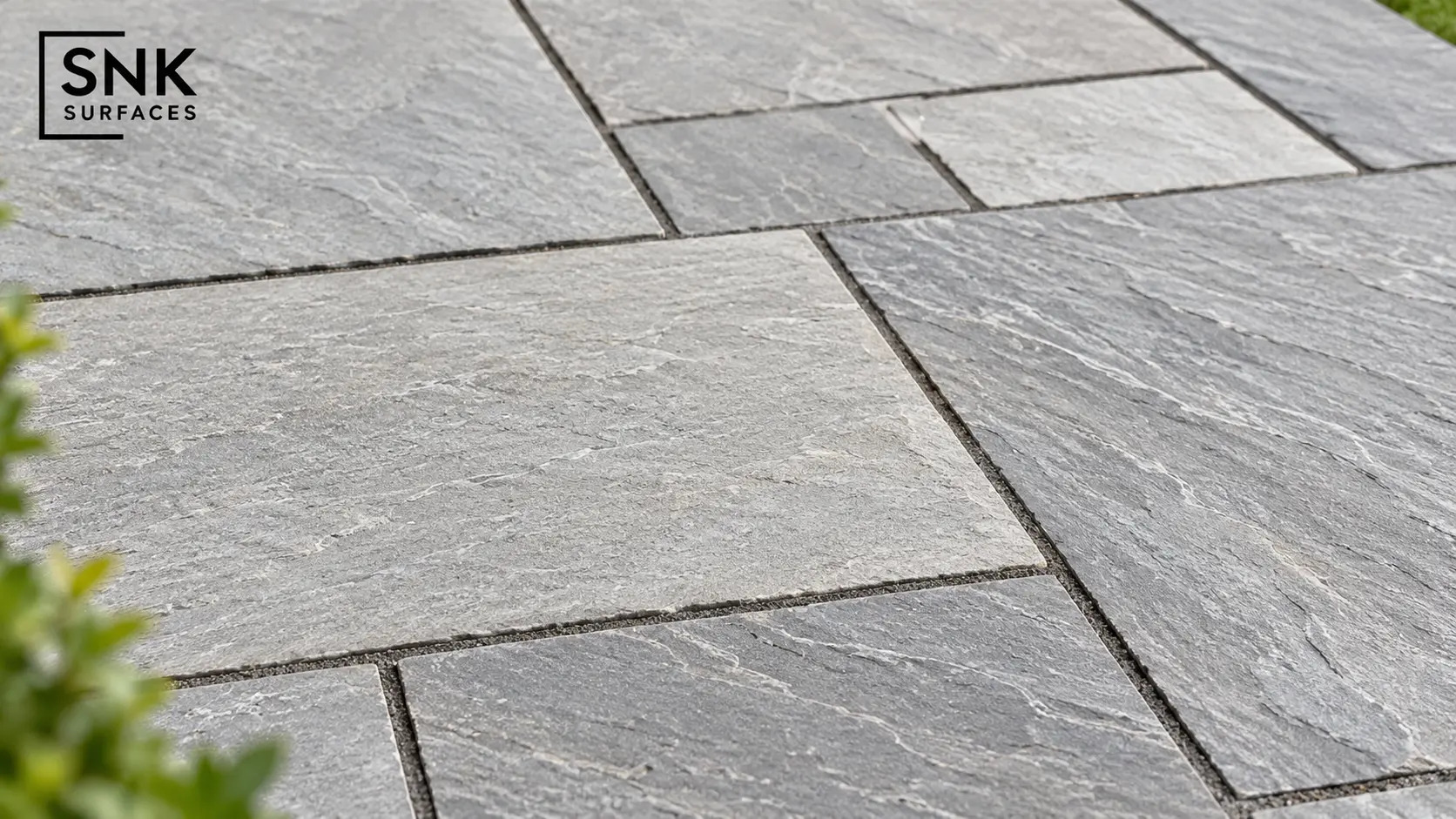
Kandla Grey Indian Sandstone is a natural paving material commonly used for patios, garden paths, terraces and other external landscaping applications. Its predominantly silver-grey and blue-grey colour palette, natural surface texture and availability in different formats make it suitable for both traditional and contemporary outdoor spaces.
Kandla Grey is a commercial name for sandstone quarried in India. As a natural sedimentary stone, it exhibits variations in colour, grain structure and texture. These characteristics distinguish it from manufactured paving products and mean that individual paving slabs may differ in appearance.
[edit] Characteristics of Kandla Grey Indian Sandstone
Kandla Grey sandstone is a quartz-rich sedimentary rock formed from compacted sand grains cemented together by naturally occurring minerals. Its appearance is characterised by predominantly grey and silver tones, although individual slabs may contain variations in shade, grain and natural markings.
The relatively neutral colour makes it compatible with a range of external materials, including brickwork, rendered walls, timber, metal fencing and planted areas. It can be incorporated into both traditional garden designs and contemporary landscape schemes.
The appearance of the stone changes according to moisture conditions. When dry, the surface generally appears lighter, while exposure to rain or moisture tends to deepen the grey tones. Natural variations between individual slabs should be considered when specifying and installing the material.
Sandstone is porous and its physical properties, including water absorption, strength and resistance to weathering, depend on its geological characteristics. The suitability of a particular product for external paving should therefore be assessed using relevant technical information and test data.
[edit] Finishes and applications
Kandla Grey sandstone is available in different surface finishes, each producing a distinct appearance and texture. Common finishes include:
- Riven: A naturally split surface with an irregular texture, often used in traditional landscaping.
- Sandblasted: A textured surface produced by abrasive treatment, giving a relatively consistent appearance.
- Shotblasted: A mechanically textured finish that creates a rougher surface.
- Flamed: A surface treated using high temperatures to produce a coarse texture, where the stone is suitable for this treatment.
- Smooth: A more uniform, relatively flat surface that creates a contemporary appearance.
- Tumbled: A finish in which the edges and surfaces are softened to produce a weathered appearance.
The choice of finish should take account of the intended application, appearance and required surface performance. Slip resistance is particularly important for external paving exposed to rain. Surface texture, drainage, maintenance and the accumulation of algae can all influence slip risk. Where appropriate, slip-resistance test results should be obtained for the specified product.
Kandla Grey sandstone is commonly supplied in a range of paving dimensions, including 600 × 900 mm, 600 × 600 mm and 600 × 400 mm slabs, as well as smaller units. Availability depends on the particular product and supplier.
Larger paving slabs can create a more uniform appearance across open patios and terraces, while smaller formats are suitable for pathways, borders and compact courtyards. Mixed-size paving packs can be used to create traditional patterns and more varied layouts.
Other potential applications include garden steps, stepping stones, wall copings, cobbles and decorative paving features. The thickness, strength and finish of the stone should be appropriate to the intended use and anticipated loading. Additional consideration may be required for steps, exposed edges and other applications where the stone is subject to concentrated loads.
[edit] Installation and maintenance
The performance and durability of Kandla Grey sandstone paving depend on the quality of the stone and the construction of the supporting pavement. Installation should take account of ground conditions, anticipated loading, drainage and the characteristics of the paving units.
A suitable installation generally requires a properly prepared and compacted sub-base, an appropriate bedding system and correctly formed joints. The construction should provide adequate support and falls to prevent prolonged standing water. Surface water should be directed away from buildings, with suitable drainage incorporated where necessary.
The bedding and jointing materials should be compatible with the stone and the chosen installation method. The paving specification should also account for the required finished levels and the relationship between the paving and adjacent damp-proof courses.
Regular maintenance can help preserve the appearance and condition of sandstone paving. Recommended measures include:
- Sweeping away leaves, soil and other debris to prevent organic matter accumulating.
- Cleaning with water and products specifically suitable for natural sandstone.
- Removing moss, algae and other organic growth using appropriate cleaning methods.
- Avoiding strongly acidic or otherwise aggressive cleaning products that could damage the stone.
- Inspecting joints, drainage and paving units periodically for signs of deterioration or movement.
- Considering a suitable stone sealer where additional protection against staining is required.
Sealing is not universally necessary. Where used, the sealer should be compatible with the particular sandstone and its surface finish. It may reduce the absorption of some liquids but does not eliminate staining or replace appropriate drainage and maintenance. The potential effect on the colour and appearance of the stone should also be considered.
[edit] Selecting and purchasing Kandla Grey Indian Sandstone
Before specifying or purchasing Kandla Grey sandstone, the dimensions, thickness, finish, quantity and coverage of the paving should be established. The intended application and site conditions should determine the required technical specification.
Natural stone exhibits inherent variations in colour and texture. Samples should therefore be assessed against the expected range of characteristics rather than treated as an exact representation of every paving unit. For larger projects, viewing a representative selection of slabs or material from the intended production batch can help establish the likely appearance of the completed installation.
The technical specification should include relevant information on water absorption, strength, durability and slip resistance where these properties affect the intended application. Resistance to frost and weathering is particularly relevant for external paving in climates subject to repeated wetting and freezing.
For imported stone, procurement considerations may include the country of origin, batch consistency, packaging, transport arrangements, delivery times and replacement availability. Additional quantities may be required to accommodate cutting, breakages and future repairs. Stone from a subsequent production batch may not match the original installation exactly.
[edit] Frequently asked questions
[edit] Is Kandla Grey Indian Sandstone suitable for patios?
Yes. Kandla Grey sandstone is commonly used for external patios, terraces and garden paths. Its suitability depends on the properties of the particular stone, its thickness, surface finish and the quality of the supporting construction. Appropriate drainage and slip resistance should also be considered.
[edit] Does Kandla Grey sandstone change colour when wet?
Yes. The grey tones generally become darker when the stone absorbs moisture and return to a lighter appearance as it dries. The extent of this change depends on the characteristics and surface finish of the individual stone.
[edit] Does Kandla Grey sandstone need sealing?
Sealing is optional for many applications. A compatible sealer can help reduce the absorption of some liquids and make cleaning easier, but it does not prevent all staining. The decision should take account of the stone's porosity, finish, exposure and intended use.
[edit] What finishes are available for Kandla Grey sandstone?
Common finishes include riven, sandblasted, shotblasted, flamed, smooth and tumbled. Availability varies between products and suppliers. The choice should consider the desired appearance, application and surface performance.
[edit] Where is Kandla Grey sandstone quarried?
Kandla Grey is an Indian sandstone, generally associated with quarrying in Rajasthan. The precise quarry and geological provenance should be confirmed with the supplier where these details are important to the project specification.
[edit] Related articles on Designing Buildings
Featured articles
Check out some of the best features and news from Designing Buildings as well as key stories from around the web.

National Scheme of Delegation introduced.

The cost of employing people remains a concern.
Code of Practice for Electrical Energy Storage Systems.

ECA calls on members to comment on draft 4th edition.

Bringing together expertise and creating cultural benefits.

CIOB celebrates positive Ofsted report.

The Building Safety Regulator announces a call for evidence.

Government approach could undermine delivery and regeneration.
World's first mass timber data centre.

The overlooked environmental aspect of data centre development.
Introduction to radon awareness

New technical information sheet published by CIOB.

Updated supplier guide can help electrical contractors engage with NHP.

CIAT confirm the winners of the 2026 architectural technology awards.

Government launches a one stop shop for flood preparedness.